
Guardians of the Blueprint: Understanding the PRC Board of Civil Engineering
For every aspiring Civil Engineer in the Philippines, few names carry as much weight, respect, and anticipation as the members of the Professional Regulation Commission (PRC) Board of Civil Engineering. Commonly referred to by examinees as the "CELE Examiners," this distinguished three-member panel is tasked with crafting, evaluating, and maintaining the standards of the Civil Engineer Licensure Examination (CELE). The board consists of Chairperson Engr. Praxedes P. Bernardo, together with Board Members Engr. Pericles P. Dakay and Dr. Romeo A. Estañero. Together, they represent a high bar of academic rigor, industry expertise, and professional ethics.
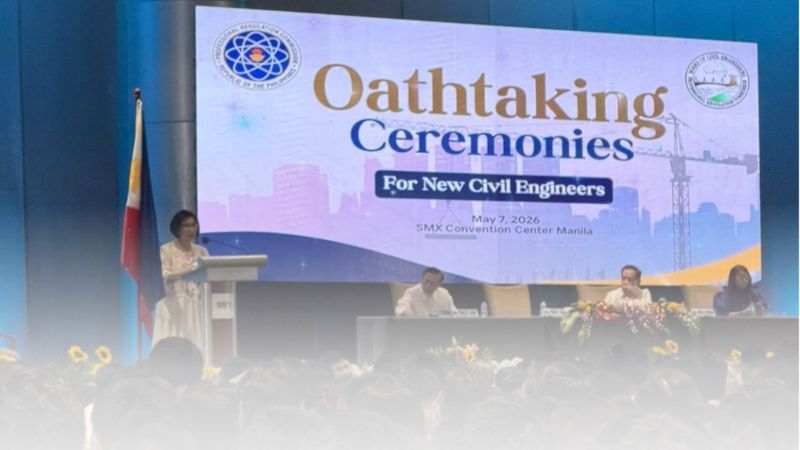
For every aspiring Civil Engineer in the Philippines, few names carry as much weight, respect, and anticipation as the members of the Professional Regulation Commission (PRC) Board of Civil Engineering. Commonly referred to by examinees as the "CELE Examiners," this distinguished three-member panel is tasked with crafting, evaluating, and maintaining the standards of the Civil Engineer Licensure Examination (CELE).
The board consists of Chairperson Engr. Praxedes P. Bernardo, together with Board Members Engr. Pericles P. Dakay and Dr. Romeo A. Estañero. Together, they represent a high bar of academic rigor, industry expertise, and professional ethics.
1. Engr. Praxedes P. Bernardo — Chairperson
Core Focus Area: Principles of Structural Analysis and Design (PSAD)
Weight in Examination: 35%
As the Chairperson of the Board of Civil Engineering, Engr. Praxedes P. Bernardo brings decades of top-tier structural engineering and project management experience to the table. Having served across both private and public infrastructure sectors—notably contributing to major structural and infrastructure design projects—Chairman Bernardo embodies the high standard expected of practicing structural engineers.
In the board exam, Chairman Bernardo oversees Structural Engineering & Construction. Examinees know this module for testing fundamental concepts in statics, mechanics of deformable bodies, reinforced concrete design, steel structural analysis, and construction safety/management. Under his leadership, the exams emphasize practical application alongside theoretical mastery, challenging students to think like real-world structural designers.
2. Engr. Pericles P. Dakay — Board Member
Core Focus Area: Applied Mathematics, Surveying, Principles of Transportation & Highway Engineering, Construction Management
Weight in Examination: 35%
Engr. Pericles "Ricky" Dakay is a prominent figure in the Philippine construction and engineering industry. Based in the Visayas region and heavily involved in high-level construction management, contracting, and regional development, Engr. Dakay brings a sharp, real-world operational perspective to the licensure board.
Handling the Mathematics, Surveying, and Transportation Engineering portion of the CELE, Engr. Dakay’s exam sections focus on core analytical capabilities. From calculus, engineering economics, and surveying procedures to modern highway design, traffic engineering, and construction scheduling methods, his subject area evaluates how efficiently future engineers can solve field problems, manage project budgets, and design crucial transport networks.
3. Dr. Romeo A. Estañero — Board Member
Core Focus Area: Hydraulics and Principles of Geotechnical Engineering (HPGE)
Weight in Examination: 30%
Dr. Romeo A. Estañero is widely recognized as one of the country's foremost academic minds in structural and geotechnical engineering. With a rich academic background as a professor, researcher, and structural consultant (notably affiliated with the University of the Philippines Diliman), Dr. Estañero brings deep academic rigor to the examination board.
His primary domain on the board covers Hydraulics and Geotechnical Engineering. This module tests examinees on fluid mechanics, open-channel flow, hydrology, soil mechanics, soil parameters, foundation engineering, and earth pressures. Given Dr. Estañero’s academic background, questions in this section heavily test fundamental principles, conceptual understanding, and precise mathematical modeling—ensuring that candidates understand the earth and fluid forces acting on engineered structures.
The Legacy of the CE Examiners
While examinees often view the examiners through the lens of nervous preparation, the role of Dr. Bernardo, Engr. Dakay, and Dr. Estañero extends beyond creating difficult exam papers. As the statutory gatekeepers of the Philippine civil engineering profession, their work ensures that everyone who earns the title "Civil Engineer" (CE) possesses the competencies, technical knowledge, and ethical framework required to design safe bridges, build sound infrastructure, and protect public safety.