
Concrete Is Strong, So Why Does It Still Crack? Understanding the Causes Behind Concrete Failures
Concrete is one of the most widely used construction materials in the world. From residential houses and high-rise buildings to bridges, highways, and flood-control structures, its ability to withstand significant compressive forces makes it essential to modern infrastructure.
Introduction
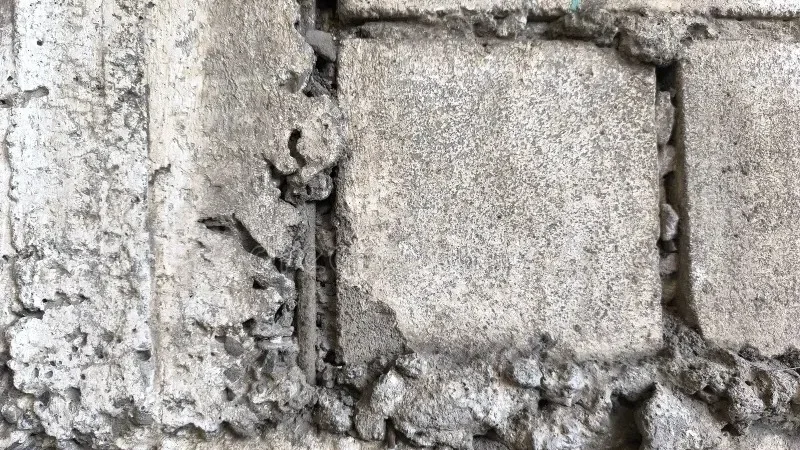
Concrete is one of the most widely used construction materials in the world. From residential houses and high-rise buildings to bridges, highways, and flood-control structures, its ability to withstand significant compressive forces makes it essential to modern infrastructure. However, despite its strength and durability, concrete has one common problem that engineers, contractors, and property owners encounter, the cracking.
Whether it appears as a thin line across a newly poured floor, a visible crack along a concrete wall, or a wider fracture in a structural member, cracking often raises questions about the quality and safety of a structure. Does it mean the concrete was poorly mixed? Was the curing process inadequate? Or is the structure experiencing excessive loads?
The answer is not always straightforward. Concrete can crack for several reasons, even when it has been properly designed and constructed. Changes in moisture and temperature, restrained movement, ground settlement, reinforcement corrosion, and externally applied loads can all contribute to cracking. According to the American Concrete Institute (ACI), cracks may affect appearance alone, but they can also indicate significant structural distress or durability problems (ACI, n.d.).
Understanding why concrete cracks is therefore important not only for identifying defects but also for determining the appropriate prevention, inspection, and repair measures.
Why Does Strong Concrete Still Crack?
To understand why concrete cracks, it is important to recognize the difference between its compressive and tensile strength.
Concrete performs well when subjected to compression, which occurs when forces push or squeeze a material together. However, it is considerably weaker when subjected to tension, where forces attempt to pull the material apart. This is why reinforced concrete incorporates steel reinforcement to help resist tensile forces that concrete alone cannot adequately withstand.
Cracking occurs when tensile stresses exceed the tensile capacity of the concrete. These stresses may develop because of shrinkage, temperature changes, settlement, structural loading, or other conditions.
Another important characteristic is that concrete changes volume. It can expand or contract as moisture and temperature conditions change. When this movement is restrained by foundations, adjoining structural elements, reinforcement, or surrounding materials, stresses may develop and eventually cause cracks.
The National Ready Mixed Concrete Association (NRMCA) explains that concrete cracking can result from movement associated with moisture, temperature, loading, and support conditions. It also emphasizes that completely crack-free concrete cannot realistically be guaranteed, although proper design and construction practices can reduce and control cracking (NRMCA, 2014).
Common Causes of Concrete Cracking
Not all cracks develop in the same way. Some appear while concrete is still fresh, while others develop after it has hardened. Identifying the possible cause is important because the appropriate preventive and corrective measures depend on the type of cracking.
1. Plastic Shrinkage Cracking
Plastic shrinkage cracks develop while concrete is still fresh and has not completely hardened. They commonly occur when water evaporates from the concrete surface faster than it can be replaced by bleeding water moving upward through the mixture.
This condition is more likely during hot, dry, and windy weather, when the exposed concrete surface loses moisture rapidly. The resulting volume reduction creates tensile stresses in the surface layer, which may lead to cracking.
According to NRMCA, plastic shrinkage cracks commonly appear as relatively shallow, parallel cracks on horizontal concrete surfaces. Although they are often considered primarily cosmetic, they may provide pathways for aggressive substances to enter the concrete and affect its durability (NRMCA, 2014).
2. Drying Shrinkage Cracking
Unlike plastic shrinkage, drying shrinkage occurs after concrete has hardened. As moisture gradually leaves the hardened cement paste, the concrete undergoes volume reduction.
If the concrete is free to move, it may shrink without developing significant restraint-induced stress. However, when its movement is restricted by foundations, adjoining walls, reinforcement, or other structural elements, tensile stresses can develop and cause cracks.
The Federal Highway Administration (FHWA) identifies drying shrinkage as a common source of cracking in hardened concrete. It also explains that proper jointing and workmanship help accommodate expected volume changes and reduce uncontrolled cracking (FHWA, 2006).
3. Thermal Cracking
Concrete is affected by changes in temperature. During cement hydration, heat is generated as cement reacts with water. In large concrete placements, such as massive foundations and thick structural elements, the internal temperature may become significantly higher than the surface temperature.
As the concrete cools, it contracts. If this contraction is restrained or if substantial temperature differences develop between different parts of the member, tensile stresses may form and cause cracking.
Thermal cracking may also occur when concrete experiences substantial temperature fluctuations during its early stages or throughout its service life.
The FHWA identifies thermal volume changes as one of the recognized causes of concrete cracking, particularly in mass concrete and concrete pavement applications (FHWA, 2006).
4. Settlement Cracking
Settlement cracking occurs when concrete or its supporting ground moves unevenly.
In fresh concrete, settlement may occur as the mixture consolidates and settles around reinforcement or other embedded elements. This can create cracks, particularly when movement is restrained by reinforcing bars or formwork.
In hardened concrete slabs and structural elements, differential settlement of the supporting soil or foundation can produce additional stresses. If different portions of a structure move by different amounts, cracks may develop as the structure attempts to accommodate the resulting deformation.
The NRMCA identifies improper subgrade preparation and settlement as factors associated with concrete cracking (NRMCA, 2014).
5. Cracking Due to Reinforcement Corrosion
Reinforced concrete is designed to protect embedded steel reinforcement through the surrounding concrete cover. However, when aggressive substances such as chloride ions penetrate the concrete, or when carbonation reduces the protective alkalinity around the reinforcement, corrosion may occur.
As steel corrodes, the resulting corrosion products occupy a greater volume than the original steel. This expansion creates internal pressure against the surrounding concrete, which can result in cracking, delamination, and eventually spalling.
The FHWA explains that reinforcement corrosion can produce cracking along the plane where the steel reinforcement is located. It also highlights the importance of adequate concrete cover in protecting embedded reinforcement from harmful substances (FHWA, 2006).
6. Structural Loading and Design-Related Cracking
Concrete members are designed to resist anticipated loads, including dead loads, live loads, and other applicable actions. However, when the applied loads exceed the member's capacity, or when the structural design and detailing are inadequate for the actual conditions, cracking may occur.
In reinforced concrete beams, for example, flexural cracks may develop in regions subjected to bending. Some cracking is expected in reinforced concrete under service loads and is considered in structural design. However, excessive crack widths, unusual crack patterns, or cracks accompanied by significant deformation may indicate a problem requiring further investigation.
The FHWA identifies externally applied loads, construction overloads, and errors in design and detailing among the possible causes of concrete cracking (FHWA, 2006).
Does Every Concrete Crack Mean a Structure Is Unsafe?
One of the most common misconceptions in construction is that every visible crack indicates structural failure. In reality, the significance of a crack depends on its cause, location, width, depth, pattern, movement, and effect on the performance of the concrete member.
Some cracks are shallow and primarily affect appearance. Others may allow moisture and harmful substances to penetrate the concrete, reducing its durability over time. Cracks in structural members may also indicate excessive loading, reinforcement corrosion, foundation movement, or other conditions requiring professional evaluation.
The ACI emphasizes that concrete cracks can range from appearance-related defects to indicators of significant structural distress. Therefore, engineers should not assess the safety of a structure based solely on whether a crack is visible (ACI, n.d.).
When cracks appear in beams, columns, foundations, slabs, or other structural components, a qualified structural engineer should evaluate the condition before conclusions are made. Monitoring crack width and movement, reviewing structural drawings, examining the surrounding conditions, and conducting appropriate tests may be necessary.
The important distinction is not simply whether concrete has cracked, but why it cracked and whether the condition affects structural safety or durability.
How Can Engineers Prevent and Control Concrete Cracking?
Although cracking cannot be completely eliminated in every concrete application, engineers and construction professionals can reduce its likelihood and manage its effects through proper design, material selection, construction practices, and maintenance.
1. Proper mix design
Concrete mixture proportions should be appropriate for the required strength, workability, exposure conditions, and durability. Unnecessary addition of water at the construction site should be avoided because it can affect the properties and performance of the mixture.
2. Correct placement and finishing
Proper concrete placement and finishing help minimize defects associated with segregation, excessive surface working, and rapid moisture loss. Construction personnel should follow appropriate procedures based on the concrete mixture and environmental conditions.
3. Adequate curing
Curing helps maintain suitable moisture and temperature conditions for cement hydration and the development of concrete properties. Insufficient curing, particularly during unfavorable weather conditions, can increase the risk of surface drying and cracking.
4. Proper jointing and detailing
Contraction joints, isolation joints, and construction joints serve different purposes. They must be properly located, detailed, and constructed to accommodate expected movement and control where cracking occurs.
5. Stable foundation and subgrade preparation
The supporting soil and base materials must be properly investigated and prepared. Uniform support helps minimize differential settlement and cracking in slabs and other concrete elements.
6. Regular inspection and maintenance
Concrete structures should be inspected for cracks, corrosion, leakage, deformation, and other signs of deterioration. Early identification allows engineers to determine whether monitoring, maintenance, or repair is necessary.
The NRMCA's guidance on cracking concrete surfaces emphasizes the importance of proper subgrade preparation, mixture selection, finishing, curing, jointing, and reinforcement detailing in reducing and controlling cracking (NRMCA, 2014).
Conclusion: Strong Concrete Requires More Than Strength
Concrete remains one of the most important construction materials because of its versatility, availability, and ability to withstand substantial compressive forces. However, its performance depends on more than achieving a specified compressive strength.
Moisture loss, temperature changes, settlement, reinforcement corrosion, construction practices, and structural loading can all contribute to cracking. Understanding these mechanisms allows civil engineers to identify potential problems, establish appropriate preventive measures, and determine when professional assessment is necessary.
For construction professionals, the lesson is clear: good concrete is not defined by strength alone, but also by proper design, workmanship, curing, durability, and maintenance.
A crack does not automatically mean failure, but ignoring the reason behind it can lead to more serious problems. In civil engineering, knowing why concrete cracks is just as important as knowing how to make it strong.
References
American Concrete Institute. (n.d.). Cracking in concrete. https://www.concrete.org/topicsinconcrete/topicdetail.aspx?search=Cracking+in+Concrete
Federal Highway Administration. (2006, July). Petrographic methods of examining hardened concrete: A petrographic manual (FHWA-HRT-04-150), Chapter 4: Cracks. U.S. Department of Transportation. https://www.fhwa.dot.gov/publications/research/infrastructure/pavements/pccp/04150/chapt4.cfm
National Ready Mixed Concrete Association. (2014). CIP 4—Cracking concrete surfaces. Concrete in Practice. https://www.nrmca.org/wp-content/uploads/2021/01/04pr.pdf
National Ready Mixed Concrete Association. (2014). CIP 5—Plastic shrinkage cracking. Concrete in Practice. https://www.nrmca.org/wp-content/uploads/2021/01/05pr.pdf
How was the read?
Let us know what you think.
Loading reactions…