
Built to Protect, but Why Did It Fail? Examining the Damaged Flood-Control Project in Pampanga
Flood-control infrastructure plays an essential role in protecting communities from rising river levels, soil erosion, and flooding. However, when a structure designed to provide protection becomes damaged shortly after completion, it raises important questions about its structural performance, construction quality, and long-term reliability.
Introduction
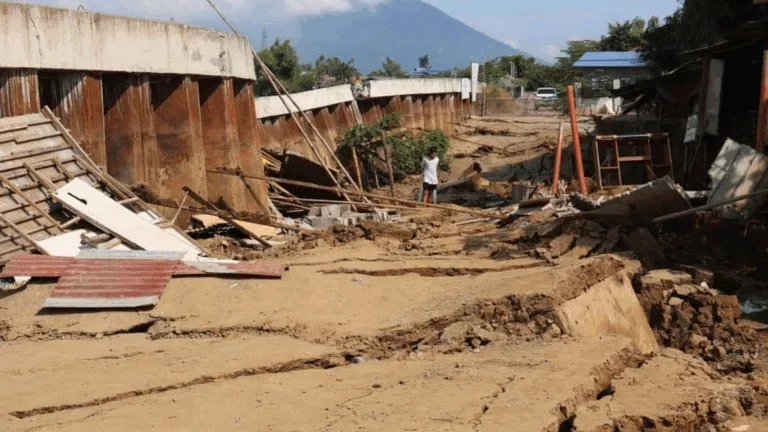
Flood-control infrastructure plays an essential role in protecting communities from rising river levels, soil erosion, and flooding. However, when a structure designed to provide protection becomes damaged shortly after completion, it raises important questions about its structural performance, construction quality, and long-term reliability. This concern emerged in October 2026, when damage to the San Mateo Flood Control Project in Arayat, Pampanga, prompted an investigation by the Department of Public Works and Highways (DPWH).
According to a report by the Daily Tribune published on October 11, 2026, an inspection conducted on October 9 revealed displaced and damaged sheet piles, along with a collapsed section of roadway. Approximately 250 meters of roadway and 56 linear meters of sheet piling were reported to be affected. The project had been declared completed in 2024, making the damage a significant concern for nearby residents who depend on the structure for protection against flooding and river-related hazards (Daily Tribune, October 11, 2026).
The incident highlights an important issue in civil engineering: completing a construction project does not automatically guarantee that it will perform safely and reliably throughout its intended service life. Flood-control structures must be designed, constructed, inspected, and maintained according to the conditions they are expected to withstand.
Understanding the Incident
The San Mateo Flood Control Project was intended to help protect the surrounding area from river-related flooding and erosion. However, damage to its sheet piles and roadway raised concerns about its ability to perform that function.
During the October 9 inspection, DPWH Secretary Vince Dizon, Pampanga Vice Governor Dennis Pineda, and Arayat Mayor Jeffrey Luriz examined the damaged sections. The DPWH announced that it would conduct a detailed investigation to establish the cause of the failure and determine whether construction standards had been violated.
The investigation included plans to extract and examine the embedded sheet piles to verify their dimensions and compliance with project specifications. Officials stated that the specified sheet-pile length was 36 meters. The contractor was also expected to address the damaged sections because the project remained under warranty, according to the published reports (SunStar Pampanga, October 12, 2026).
A subsequent Daily Tribune report on October 21 described the project, valued at approximately ₱96 million, as still damaged and reported concerns regarding whether the affected sheet piles met the specified depth requirements. These developments added to questions about construction compliance and the implementation of corrective measures (Daily Tribune, October 21, 2026).
Although these reports provide important information about the incident, the precise technical cause should not be assumed without the findings of a comprehensive engineering investigation.
The Civil Engineering Behind Flood-Control Structures
Flood-control structures must withstand hydraulic forces, soil pressure, erosion, and changes in ground conditions. Their performance depends on the interaction between structural design, geotechnical conditions, water behavior, and construction quality.
One important component in the Pampanga incident is the sheet pile. Sheet piles are interlocking structural elements installed into the ground to retain soil, control seepage, and provide support along riverbanks or excavations. Depending on the design, they may be made from steel, concrete, or other suitable materials.
In a flood-control application, sheet piles may help resist lateral soil and water pressures. Their required length, embedment depth, section properties, and installation method depend on factors such as soil stratification, groundwater conditions, river levels, scour potential, and the loads imposed on the structure.
If sheet piles do not meet the approved specifications, the structure may not perform as intended. However, inadequate dimensions are only one possible source of problems, they must be verified through measurements and engineering analysis rather than inferred solely from visible damage.
1. Geotechnical stability and soil conditions
Geotechnical engineering is essential to flood-control design because the ground beneath and around a structure directly affects its stability. Engineers must evaluate the soil's strength, permeability, stratification, and resistance to erosion.
If the retained soil loses support through erosion or scour, the structure may experience increased deformation or loss of stability. Similarly, changes in groundwater levels and seepage conditions can affect soil behavior and the forces acting on retaining elements.
For the San Mateo project, these are relevant factors for investigation, not confirmed causes. Determining their contribution would require site investigations, soil data, surveys, and a review of the original design calculations.
2. Hydraulic forces and river behavior
Flood-control structures are exposed to changing water levels and river flow conditions. Rising water levels can increase hydrostatic pressure, while flowing water can erode riverbanks and remove supporting soil around structural elements.
The Philippine News Agency reported on October 14, 2026, that the DPWH was investigating the Arayat damage following soil cracking and collapse associated with rising water levels in the Pampanga River after an extended period of rainfall (Philippine News Agency, October 14, 2026).
These conditions make hydraulic analysis an important part of the investigation. Engineers need to determine whether the structure was designed for the relevant water levels, flow conditions, and erosion risks, and whether the observed damage is consistent with those loading conditions.
3. Construction quality assurance and material compliance
Even a sound design can be compromised if construction does not follow approved plans and specifications. Quality assurance and quality control procedures help verify that materials, dimensions, installation methods, and workmanship meet the required standards.
For sheet-pile structures, verification may include reviewing delivery records, material certificates, installation logs, as-built drawings, and inspection reports. Physical extraction and measurement of selected piles can also help determine whether the installed elements match the approved requirements.
In the Pampanga case, the DPWH announced plans to examine the embedded sheet piles and investigate possible noncompliance. The results of those examinations are important because the distinction between a design problem, a construction defect, and damage caused by site conditions can only be established through evidence.
Why Inspection and Maintenance Matter
Infrastructure safety does not end when a contractor declares a project complete. Regular inspections help identify early signs of deterioration, including cracking, settlement, deformation, displacement, seepage, and erosion.
For flood-control structures, inspections should also consider riverbank changes, scour near the foundation, drainage performance, and damage following significant rainfall or flooding events. When defects are identified, engineers must assess their severity and implement appropriate corrective measures.
A warranty can provide a mechanism for addressing qualifying construction defects, but the existence of a warranty does not replace technical assessment. Repairs should address the underlying cause rather than simply restore the visible appearance of the damaged structure.
The Pampanga incident therefore demonstrates the importance of combining construction supervision, accurate as-built documentation, independent inspection where appropriate, and a maintenance plan that continues throughout the structure's service life.
Implications for Public Infrastructure and Construction Management
Flood-control projects involve public funds and are expected to provide long-term protection to the communities they serve. When damage occurs soon after completion, the consequences extend beyond the cost of repairs. Residents may face continued exposure to flood risks, while public agencies must allocate resources to investigation, rehabilitation, and monitoring.
From a construction management perspective, the incident raises several important considerations: Were approved plans and specifications followed? Were the installed materials properly verified? Were construction activities adequately inspected and documented? Were site conditions and potential risks properly evaluated during design and construction?
These questions should be answered through project records, technical assessments, and the results of the official investigation. Assigning responsibility before the evidence is established would be premature.
Transparent reporting of the investigation's findings can help the public understand what happened and identify improvements needed in future infrastructure projects. It can also support stronger procurement practices, construction monitoring, risk management, and accountability throughout the project lifecycle.
Conclusion
The damage to the San Mateo Flood Control Project in Arayat, Pampanga, highlights the importance of engineering beyond project completion. Flood-control infrastructure must be designed for actual site conditions, constructed according to approved specifications, and monitored to ensure that it continues to perform its intended function.
For civil engineers, the incident provides a practical case study in geotechnical stability, hydraulic forces, sheet-pile design, quality assurance, and construction management. It also reinforces the need to distinguish between visible damage and its verified technical cause.
Ultimately, the purpose of flood-control infrastructure is not simply to complete a project, but to provide reliable and lasting protection. The findings of the investigation will be important in determining why the damage occurred and what corrective measures are necessary to help prevent similar problems in future projects.
References
Daily Tribune. (2026, October 11). DPWH probes damaged Pampanga flood control project. https://tribune.net.ph/2026/10/11/dpwh-probes-damaged-pampanga-flood-control-project
Daily Tribune. (2026, October 21). P96-M flood control project remains damaged in Pampanga. https://tribune.net.ph/2026/10/21/p96-m-flood-control-project-remains-damaged-in-pampanga
Philippine News Agency. (2026, October 14). DPWH completes Arayat, Pampanga bridge before holidays. https://www.pna.gov.ph/article/dpwh-completes-arayat-pampanga-bridge-before-holidays
SunStar Pampanga. (2026, October 12). DPWH to probe damaged flood-control dike in Arayat. https://www.sunstar.com.ph/amp/story/pampanga/dpwh-to-probe-damaged-flood-control-dike-in-arayat
How was the read?
Let us know what you think.
Loading reactions…