
When Fire Strikes a Construction Site: What the Malvar Factory Fire Teaches Us About COSH and BOSH
A construction project is not only about structural integrity, project completion, and meeting deadlines. It is also about protecting the people who build it. Every construction site involves potential hazards that must be identified, assessed, and controlled before they lead to injuries, property damage, or other serious consequences.
Introduction
A construction project is not only about structural integrity, project completion, and meeting deadlines. It is also about protecting the people who build it. Every construction site involves potential hazards that must be identified, assessed, and controlled before they lead to injuries, property damage, or other serious consequences.
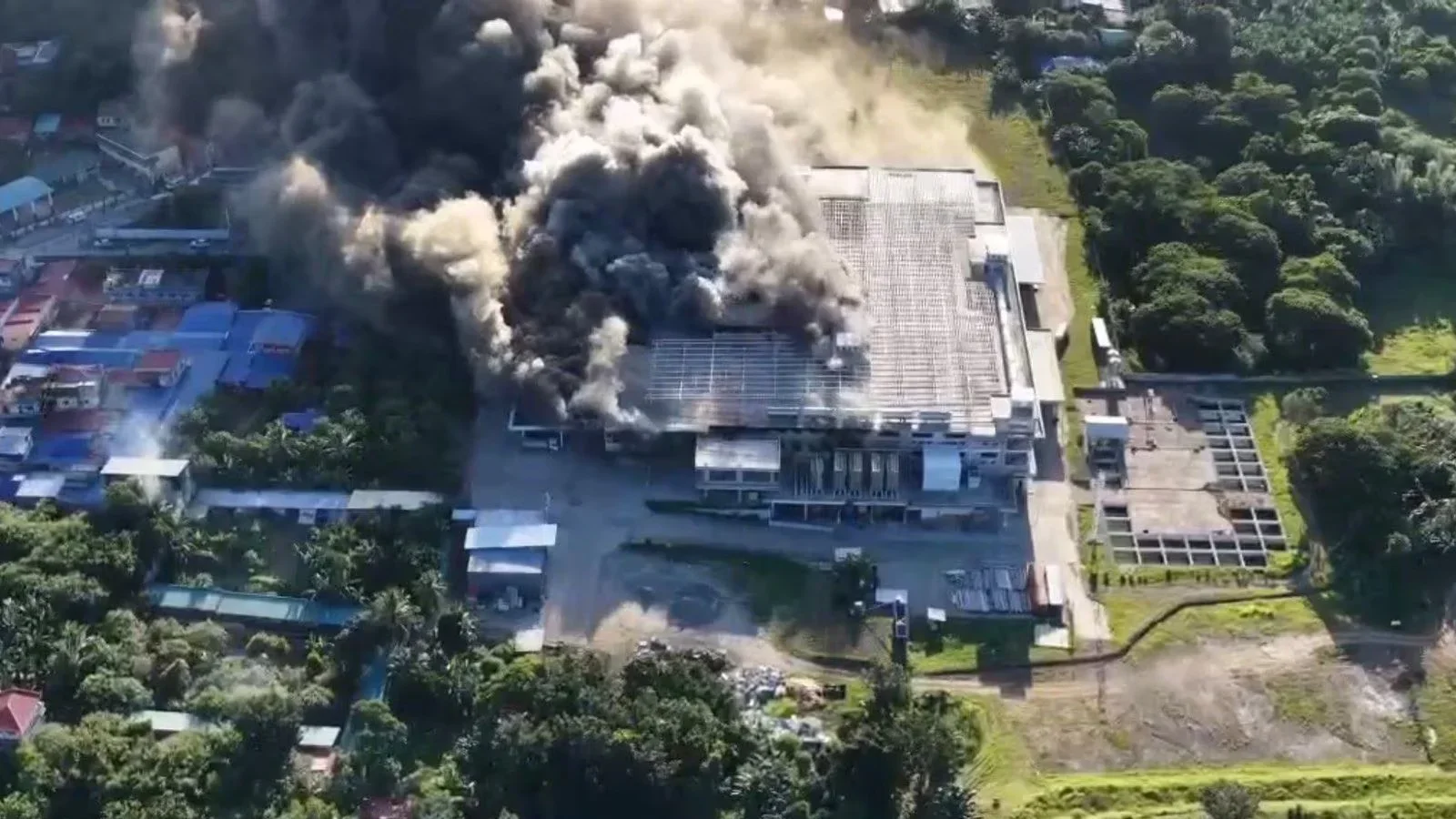
On October 17, 2026, a major fire broke out at the under-construction Dan Eric’s Grand Ice Cream manufacturing and cold storage plant in Barangay Bulihan, Malvar, Batangas. The incident drew a large response from firefighters and emergency personnel. According to the Daily Tribune, the Bureau of Fire Protection (BFP) estimated the initial property damage at approximately ₱111 million. As of October 18, investigators had not yet established the fire’s exact origin and cause (Escovidal, 2026).
The incident highlights an important issue for the construction industry: How can construction companies strengthen workplace safety and emergency preparedness while a facility is still being built?
Although the cause of the Malvar fire has not been confirmed in the cited report, the incident provides an opportunity to examine the importance of occupational safety and health, particularly Construction Occupational Safety and Health (COSH) and Basic Occupational Safety and Health (BOSH) training.
What Happened in Malvar, Batangas?
The fire occurred at a facility under construction in Barangay Bulihan, Malvar, Batangas, on October 17, 2026. News reports identified the project as the Dan Eric’s Grand Ice Cream manufacturing and cold storage plant associated with Danilo Flores.
According to the Daily Tribune, the fire reached the third alarm, and the Malvar Fire Station declared it extinguished at 8:22 p.m. on October 17. The initial damage estimate was ₱111 million, and the BFP was still investigating the origin and cause of the fire the following day (Escovidal, 2026).
ABS-CBN News also reported on the incident on October 18, identifying the affected facility as an ice cream storage facility under construction in Malvar (Datu, 2026).
These reports establish the occurrence and seriousness of the incident, but they do not establish whether a particular construction activity, electrical component, material, or safety procedure caused the fire. Any conclusion about responsibility or the specific failure involved would require verified findings from the authorities.
Nevertheless, a fire at an active construction site is a reminder that workplace safety must be considered throughout the construction process, not only when a building is ready for occupancy.
Why Construction Sites Require Strong Safety Management
Construction sites are dynamic work environments. Different activities may occur simultaneously, including welding, electrical installation, cutting, material handling, equipment operation, and installation of building components. Each activity has its own hazards, and the risks can change as the project progresses.
Fire prevention is one important part of this broader safety responsibility. Under Republic Act No. 9514, or the Revised Fire Code of the Philippines of 2008, fire-safety measures apply to buildings and facilities, including provisions addressing hazardous materials, hazardous processes such as welding and soldering, fire-protection systems, alarms, and safe exits (Republic Act No. 9514, 2008).
For construction managers and safety personnel, this means fire safety must be incorporated into project planning, work procedures, site inspections, and emergency preparedness. The appropriate measures depend on the actual site conditions, construction phase, materials present, equipment being used, and applicable regulatory requirements.
Importantly, a construction site does not need to experience a fire before safety procedures become necessary. Hazard identification and preventive measures are intended to reduce risks before an emergency occurs.
COSH: Building Safety Into Construction Operations
Construction Occupational Safety and Health (COSH) training focuses on occupational safety and health practices relevant to construction activities.
The Construction Industry Authority of the Philippines (CIAP) describes the Construction Safety and Health Seminar as a 40-hour program intended to equip specified contractor applicants and personnel with knowledge of standard safety and health practices and processes in the construction industry. Its stated eligibility and application requirements are particularly relevant to certain contractor licensing and technical personnel requirements (CIAP, n.d.).
In practical construction management, safety training supports the ability of personnel to recognize hazards, follow established procedures, and implement appropriate preventive measures. In relation to fire prevention, the following practices are especially important.
1. Hazard identification and risk assessment
Before work begins, construction teams should identify potential ignition sources, combustible materials, electrical hazards, and activities that may introduce additional risks. Risk assessments should be updated whenever work conditions, materials, equipment, or construction sequences change.
2. Hot-work safety
Welding, cutting, and grinding can produce sparks or heat. These activities require suitable controls based on the work environment, including authorization where required, inspection of the work area, removal or protection of combustible materials, suitable firefighting equipment, and monitoring after the work is completed.
The Fire Code specifically identifies welding and soldering among operations requiring fire-safety measures (Republic Act No. 9514, 2008). However, this general requirement does not establish that hot work caused the Malvar incident.
3. Site housekeeping and material storage
Construction materials should be stored and handled according to their properties and applicable safety requirements. Waste, packaging, and other combustible materials should be managed so they do not create unnecessary hazards or obstruct escape routes.
4. Emergency preparedness
Workers should know the alarm procedures, evacuation routes, assembly points, and method for reporting an emergency. Site personnel should also understand when to evacuate rather than attempt to control a fire themselves.
5. Supervision and safety inspections
Safety officers and project supervisors play important roles in monitoring compliance, identifying unsafe conditions, documenting findings, and ensuring that corrective actions are implemented. A safety procedure is effective only when it is communicated, followed, and regularly reviewed.
These measures illustrate how construction safety training can contribute to a more organized approach to risk management. They should not, however, be interpreted as findings about the specific practices present at the Malvar site.
BOSH: Occupational Safety Beyond the Construction Phase
Basic Occupational Safety and Health (BOSH) training addresses occupational safety and health in workplaces more broadly. Its relevance extends beyond construction to manufacturing, storage, offices, and other work environments, depending on the applicable training program.
The Occupational Safety and Health Center (OSHC), an attached agency of the Department of Labor and Employment (DOLE), identifies BOSH and COSH among its occupational safety and health training programs. Its official 2026 report explains that mandatory BOSH SO1, BOSH SO2, and COSH programs serve designated safety officers according to the relevant requirements (OSHC, 2026).
For a facility intended for manufacturing and cold storage, workplace safety responsibilities continue after construction is completed. Depending on the actual operations and equipment installed, safety management may need to address electrical systems, machinery, refrigeration equipment, material storage, emergency access, and worker evacuation.
BOSH-related knowledge can help support the broader occupational safety and health system, including hazard identification, worker orientation, incident reporting, and emergency preparedness. Specific technical hazards must still be assessed by competent personnel and addressed through appropriate procedures, equipment, and regulatory compliance.
It is important to distinguish the two training areas: COSH is construction-focused, while BOSH addresses workplace safety and health more broadly. Neither course, by itself, replaces the technical design, inspection, fire-protection requirements, or specialized competencies required for particular hazards.
What Philippine Law Says About Workplace Safety
Republic Act No. 11058, or the Occupational Safety and Health Standards law, establishes requirements intended to strengthen workplace safety and health in the Philippines.
Among other provisions, the law addresses employers' responsibilities to provide safe working conditions, inform workers about workplace hazards, establish safety and health programs, provide appropriate protective equipment, and prepare for emergencies. It also provides for safety officers, occupational health personnel, and training requirements (Republic Act No. 11058, 2018).
For construction projects, compliance requires more than having a safety officer's name on a document or providing a one-time orientation. Safety management must be implemented through appropriate procedures, supervision, inspections, worker participation, and corrective action.
Similarly, fire safety must be addressed under the applicable Fire Code requirements. COSH and BOSH training can support safety awareness and implementation, but training alone does not guarantee that a workplace is free from hazards or that a fire will not occur.
The distinction matters because effective safety depends on the interaction of trained personnel, suitable equipment, compliant facilities, management decisions, and consistent implementation.
Lessons for Construction Companies and Project Managers
The Malvar fire offers a timely opportunity for construction companies, engineers, contractors, and safety personnel to review their own safety-management practices without making assumptions about the incident's cause.
First, construction projects should maintain a current hazard assessment that reflects the actual work being performed. When welding, electrical work, installation activities, or the handling of combustible materials are involved, the relevant risks and controls should be evaluated before the work proceeds.
Second, emergency arrangements should be practical and familiar to the workforce. Workers must know how to raise an alarm, evacuate safely, report hazards, and follow instructions from designated emergency personnel.
Third, site inspections and safety documentation should lead to corrective action. Identifying a hazard is only the first step; the hazard must be controlled and the effectiveness of the control verified.
Finally, contractors and employers should ensure that safety personnel and workers receive training appropriate to their roles. COSH and BOSH can contribute to this effort when selected according to the applicable requirements and implemented as part of a broader safety program.
Conclusion: Safety Must Be Built Into Every Project
The fire at the under-construction Dan Eric’s Grand Ice Cream manufacturing and cold storage plant in Malvar, Batangas, demonstrates the serious consequences that a major industrial fire can have on a construction project. The BFP's investigation remains essential to establishing the actual origin and cause of the incident.
For the construction industry, the broader lesson is that safety must be integrated into every stage of a project's life cycle. From site preparation and construction activities to the eventual operation of a manufacturing facility, hazard identification, competent supervision, emergency preparedness, and regulatory compliance remain essential responsibilities.
COSH and BOSH training can help develop the knowledge and practices needed to support safer workplaces. But the ultimate responsibility extends beyond completing a course: safety procedures must be applied, hazards must be controlled, and management must provide the resources and oversight necessary to protect workers.
A project is not truly successful simply because the structure is completed. It must also be built and operated with the safety of the people inside and around it in mind.
References
Construction Industry Authority of the Philippines. (n.d.). Construction Safety and Health Seminar (COSH). https://construction.gov.ph/construction-safety-and-health-seminar/
Datu, D. (2026, October 18). Fire hits ice cream storage facility under construction in Batangas. ABS-CBN News. https://www.abs-cbn.com/news/regions/2026/10/18/fire-hits-ice-cream-storage-facility-under-construction-in-batangas-1319
Escovidal, J. D. (2026, October 18). Malvar factory fire causes P111M in damage. Daily Tribune. https://tribune.net.ph/2026/10/18/malvar-factory-fire-causes-p111m-in-damage
Occupational Safety and Health Center. (2026, February 24). OSHC starts the year strong with workplace training accomplishments. https://oshc.dole.gov.ph/oshc-starts-the-year-strong-with-workplace-training-accomplishments/
Republic Act No. 9514. (2008). Revised Fire Code of the Philippines of 2008. Lawphil. https://lawphil.net/statutes/repacts/ra2008/ra_9514_2008.html
Republic Act No. 11058. (2018). An Act Strengthening Compliance with Occupational Safety and Health Standards and Providing Penalties for Violations Thereof. Lawphil. https://lawphil.net/statutes/repacts/ra2018/ra_11058_2018.html
How was the read?
Let us know what you think.
Loading reactions…