
Can the Philippines Become a “Sponge City”? Rethinking Urban Flood Management Through Civil Engineering
Every time heavy rain falls over highly urbanized areas in the Philippines, a familiar problem emerges: streets become flooded, vehicles struggle to move, and communities face disruptions to their daily activities. Although drainage systems and conventional flood-control structures remain essential, the growing challenges of urban flooding raise an important question: What if our cities were designed not only to drain rainwater away, but also to absorb, store, and manage it more effectively?
Every time heavy rain falls over highly urbanized areas in the Philippines, a familiar problem emerges: streets become flooded, vehicles struggle to move, and communities face disruptions to their daily activities. Although drainage systems and conventional flood-control structures remain essential, the growing challenges of urban flooding raise an important question: What if our cities were designed not only to drain rainwater away, but also to absorb, store, and manage it more effectively?
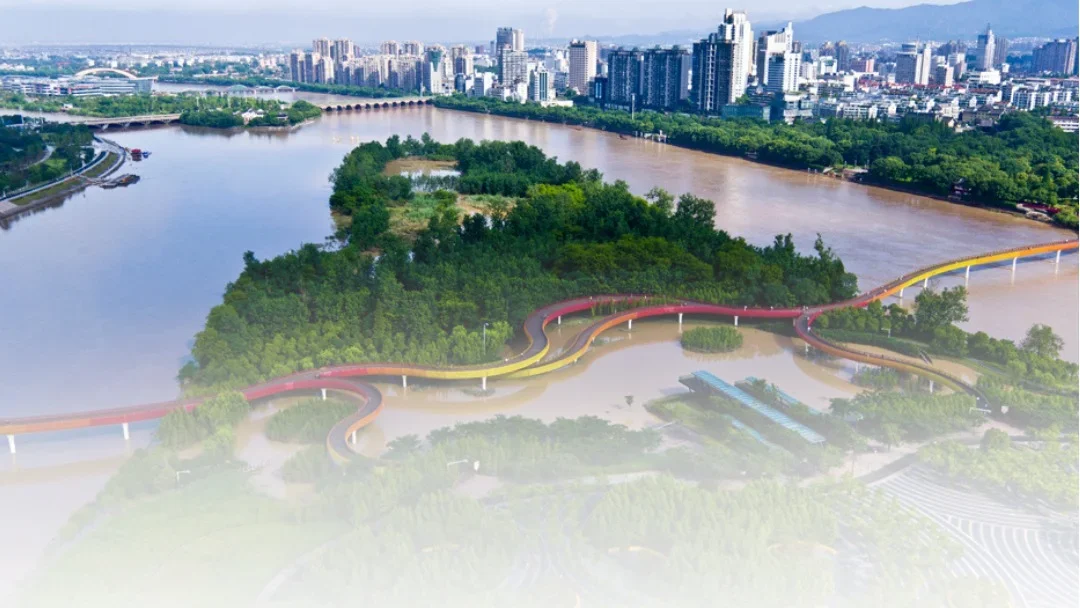
This is the central idea behind a “Sponge City”, an urban planning and engineering approach that enables cities to capture, temporarily store, filter, and gradually release rainwater. Instead of relying exclusively on conventional drainage infrastructure, the approach combines engineered systems with nature-based solutions, including green spaces, wetlands, rain gardens, permeable pavements, and water-retention facilities. Research on Sponge City development highlights its potential to improve stormwater management, reduce urban waterlogging, and support more sustainable water use (Jiang & McBean, 2021)
The Sponge City Concept: Working With Water, Not Against It
In a conventional urban environment, extensive concrete roads, rooftops, and paved surfaces limit the amount of rainwater that can infiltrate the ground. As a result, a substantial portion of rainfall becomes surface runoff, which can overwhelm drainage systems when the volume of water exceeds their capacity.
A Sponge City takes a different approach. It incorporates spaces and structures that allow rainwater to be absorbed where possible, temporarily stored, and released at a controlled rate. This can involve three complementary forms of infrastructure: green infrastructure, such as vegetation and rain gardens; blue infrastructure, such as ponds, wetlands, and restored waterways; and gray infrastructure, including drainage networks, pumping stations, and underground detention tanks. These elements work together to manage stormwater rather than depending on a single flood-control solution (Jiang & McBean, 2021).
For example, a public park can be designed to temporarily hold excess rainwater during heavy rainfall. Permeable pavement can allow water to pass through its surface into underlying layers, while detention basins can store runoff and release it gradually into drainage systems. When appropriately designed for local soil conditions, groundwater levels, rainfall intensity, and available space, these interventions can help reduce the speed and volume of runoff reaching vulnerable areas.
The Philippines Is Already Exploring the Sponge City Approach
The Sponge City concept is no longer simply an idea for the Philippines to consider. In 2026, the Metropolitan Manila Development Authority (MMDA) advanced the Metro Manila Sponge City Project as part of broader efforts to improve flood management in the National Capital Region.
According to the Philippine Information Agency, the MMDA and the Asian Infrastructure Investment Bank held a kickoff meeting for the project in March 2026. The initiative combines conventional flood-control infrastructure with nature-based solutions, including parks, wetlands, rivers, and rainwater impounding facilities. Its purpose is to strengthen the ability of Metro Manila to capture, slow down, and manage stormwater (Philippine Information Agency, 2026a).
The initiative continued to develop throughout the year. In September 2026, the government reported that a feasibility study had identified 39 potential sites for flood-catchment projects in Metro Manila, selected from an initial 107 locations. Proposed interventions included catchment facilities capable of temporarily storing excess rainwater (Presidential Communications Office, 2026).
Further developments were reported in October 2026. The MMDA and the Manila City government signed an agreement to develop three rainwater impounding facilities at Remedios Circle, Rajah Sulayman Park, and the Vito Cruz ASEAN Garden area within the Cultural Center of the Philippines complex. The facilities were intended to support flood mitigation, with a target completion date of June 30, 2027 (Philippine Information Agency, 2026b).
On October 23, 2026, the MMDA and the University of the Philippines also formalized a partnership to strengthen flood resilience through rainwater impounding facilities on campus. The initiative supports plans for 39 detention basins under the broader Metro Manila Sponge City Project. The proposed collaboration also includes research and the assessment of additional potential sites (Philippine Information Agency, 2026c).
These developments indicate that the Sponge City approach is receiving institutional attention in the Philippines. However, proposed projects and feasibility studies should not be confused with completed infrastructure or demonstrated reductions in flooding. Their actual effectiveness will depend on implementation, engineering performance, maintenance, and long-term monitoring.
How Civil Engineering Can Help Make It Work
Turning the Sponge City concept into an effective flood-management strategy requires more than planting trees or constructing additional water-storage facilities. It requires coordinated planning across several civil engineering disciplines.
Hydraulic and hydrologic engineering can help determine how much rainfall becomes runoff, how quickly water moves through a catchment, and how much storage is needed to reduce peak flows. Geotechnical engineering is essential for evaluating whether soil conditions permit infiltration and whether proposed facilities can safely accommodate water without causing slope instability, excessive seepage, or other ground-related problems.
Transportation and structural engineering also have important roles. Roads can incorporate suitable permeable surfaces or drainage features, while parks and other public spaces can be designed to accommodate temporary water storage. Construction management and quantity surveying can help ensure that projects are properly estimated, scheduled, inspected, and maintained.
Site selection is equally important. A detention basin must be located where it can intercept runoff effectively and where sufficient storage capacity is available. Engineers must also account for extreme rainfall, existing drainage networks, groundwater conditions, sediment accumulation, water quality, and the possible effects on neighboring communities.
The research literature emphasizes that Sponge City implementation requires an integrated understanding of urban water systems and careful coordination between planning, engineering, and environmental management (A new model framework for sponge city implementation, 2020). No single intervention can be expected to solve every flooding problem.
Challenges That Must Be Addressed
Despite its potential, implementing a Sponge City approach in the Philippines presents significant challenges.
First, densely populated urban areas have limited available land for parks, wetlands, and detention basins. Acquiring land or redesigning existing public spaces may involve substantial costs and coordination.
Second, infiltration is not equally suitable everywhere. Clay-rich soils, high groundwater levels, contaminated ground, and certain geological conditions may limit the effectiveness of infiltration-based systems. In such locations, engineered storage and controlled drainage may be more appropriate.
Third, facilities require regular maintenance. Sediment and litter can block permeable surfaces and drainage inlets, while poorly maintained storage facilities may lose their intended capacity. Effective solid-waste management and waterway maintenance therefore remain essential.
Finally, climate and rainfall conditions must be considered in the design. Facilities that perform adequately during ordinary rainfall may be insufficient during extreme weather events. Sponge City infrastructure should therefore complement, rather than replace, properly designed drainage networks, pumping stations, flood-control structures, land-use planning, and disaster preparedness.
These considerations demonstrate why the success of the approach cannot be measured simply by the number of facilities constructed. It should also be assessed through evidence of reduced runoff peaks, improved drainage performance, reliable storage capacity, and fewer flood-related disruptions.
A More Resilient Future for Philippine Cities
Can the Philippines become a Sponge City? The developments in Metro Manila suggest that the country is beginning to explore this direction. However, building a truly water-resilient city requires more than adopting a new label. It requires the integration of sound engineering, responsible urban planning, environmental protection, adequate funding, and consistent maintenance.
For civil engineers, the Sponge City concept offers an opportunity to rethink how infrastructure interacts with the natural water cycle. Roads, parks, drainage networks, and public spaces can be planned as interconnected components of a larger stormwater-management system. Instead of treating every rainfall event as a problem to be drained away as quickly as possible, cities can also explore how rainwater may be safely captured, stored, and reused.
Ultimately, a Sponge City is not a promise that flooding will disappear. It is a strategy for managing water more intelligently and reducing flood risks through coordinated, evidence-based design. Whether the Philippines can fully realize this vision will depend on how effectively these principles are translated into locally appropriate projects, and whether those projects deliver measurable benefits to the communities they are intended to protect.
References
Jiang, A. Z., & McBean, E. A. (2021). Sponge City: Using the “One Water” concept to improve understanding of flood management effectiveness. Water, 13(5), Article 583. https://doi.org/10.3390/w13050583
Interpretation and application of Sponge City guidelines in China. (2020). Philosophical Transactions of the Royal Society A: Mathematical, Physical and Engineering Sciences, 378(2168), Article 20190222. https://doi.org/10.1098/rsta.2019.0222
A new model framework for sponge city implementation: Emerging challenges and future developments. (2020). Journal of Environmental Management, 253, Article 109689. https://doi.org/10.1016/j.jenvman.2019.109689
Philippine Information Agency. (2026a, March 10). MMDA, AIIB meet for ‘Sponge City’ project vs. NCR flooding. https://pia.gov.ph/news/mmda-aiib-meet-for-sponge-city-project-vs-ncr-flooding/
Presidential Communications Office. (2026, September 2). PBBM tells MMDA: Implement site-specific flood management projects across Metro Manila. https://pco.gov.ph/news_releases/pbbm-tells-mmda-implement-site-specific-flood-management-projects-across-metro-manila/
Philippine Information Agency. (2026b, October 8). MMDA, Manila ink partnership for rainwater impounding facilities to address flooding. https://pia.gov.ph/news/luzon/ncr/mmda-manila-ink-partnership-for-rainwater-impounding-facilities-to-address-flooding/
Philippine Information Agency. (2026c, October 23). MMDA, UP reinforce flood management initiatives. https://pia.gov.ph/news/luzon/ncr/mmda-up-reinforce-flood-management-initiatives/
How was the read?
Let us know what you think.
Loading reactions…