
CELE Passing Trends (2009–2025): What the Numbers Tell Us
Becoming a civil engineer in the Philippines is no easy path—and the numbers prove it. Based on data from 2009 to 2025, the Civil Engineer Licensure Examination (CELE) remains one of the most selective board exams in the country. With an average passing rate of around 40%, the exam continues to challenge thousands of aspiring engineers every year. Beyond the numbers, the trends reveal deeper insights about preparation, exam difficulty, and the evolving landscape of engineering education in the country.
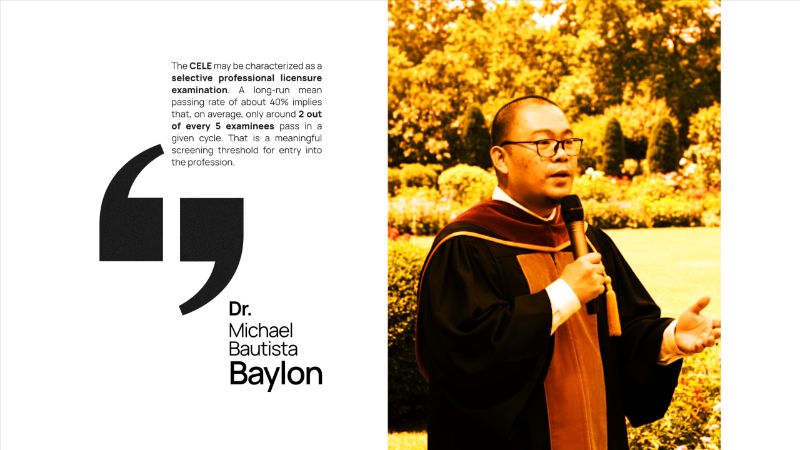
A Selective Exam: Why Only 2 Out of 5 Examinees Pass the CELE
CELE is renowned as a rigorous yet highly fair examination for prospective engineers. Considering the analysis of the data provided, it can be noted that the average percentage of successful applicants is 39.71%, which means that only two out of five applicants are able to become professional engineers after taking this exam.
Such selectivity is important since it helps to make sure that the people, who take this test, will be able to cope with their duties as engineers. In fact, the exam becomes a sort of quality control mechanism for prospective engineers.
Fluctuating Results: What the Trends Say About Difficulty and Preparation
The first notable trend in the given statistics is the inconsistency in passing percentages across varying board examination batches. This can be attributed to the fact that results may differ by as much as 5.60 percentage points based on the standard deviation.
By looking at the data over the years, clear highs and lows can be observed in the passing rates. The highest point was recorded in December 2014, with a passing rate of 49.48%, while the lowest was seen in April 2025, when only 29.21% of examinees passed. These changes suggest that several factors may affect the results, including how prepared the examinees are, the level of difficulty of the exam, and the coverage of the topics given.
In summary, every board examination cycle varies from one another.
More Takers, Same Challenge: Growth in Examinees Over Time
Another important note that can be derived from the analysis of the statistics is the consistent growth in the number of examinees throughout the years. As shown by the graph below, the number of examinees has increased tremendously, going up into the tens of thousands in recent years.
What is even more surprising is the fact that having a larger number of examinees does not necessarily result in a higher passing rate. Despite an increasing number of graduates who are taking the test, the proportion of those who pass still seems relatively unchanged or even goes down sometimes.
Recent Decline: Are Today’s Results Getting Tougher?
Taking a deeper look into more recent years, particularly from 2024 to 2025, one can observe a decline in pass rates in comparison with the high levels achieved in previous years. The data shows an overall negative trend with some of the worst performance levels occurring within the latest rounds.
There may be many factors responsible for this trend; however, the switch to online learning due to the pandemic, lack of knowledge foundation, or any other cause that resulted in poor outcomes should not be overlooked. Regardless of the specific reason, this trend calls for further improvement in terms of examination preparation.
For all prospective engineers out there, this should serve as a warning.
What the Numbers Mean for Future Engineers
In total, the dataset covers 265,741 examinees, with 105,517 passers over 30 exam cycles. These figures represent not just statistics, but real journeys—years of study, sacrifice, and determination.
The CELE is more than just a test; it is a turning point. The numbers show that success is possible, but it requires discipline, consistency, and the right mindset. Passing is not guaranteed—but it is achievable with the right preparation.
Looking Back and Moving Forward: The Need for Deeper Data
While the current dataset provides valuable insights, it only covers the period from 2009 to 2025. A complete picture of CELE trends would require data from earlier decades, possibly going back to the 1970s.
Recovering this information from sources like PRC archives, university libraries, and historical records could offer even deeper understanding of how the exam—and the profession—has evolved over time. This kind of analysis could help educators, policymakers, and review centers improve how future engineers are trained.
These numbers carry within them an inspiring tale—one of struggle, development, and resilience. Behind each of the names on the passing list lies a lot of hard work put into making it there.
At the end of the day, the exam does not just measure knowledge—it measures readiness. And for those willing to put in the work, the title “Engineer” remains one of the most meaningful achievements they can earn.